
Imagine turning $100,000 into $1.5 million instead of $930,000. Sounds too good to be true? It’s not – it’s just the math of low-fee index funds. And that’s why Vanguard Index Funds are the most referenced and suggested investments in FIRE communities.
Picture this: It’s 1975, and Wall Street thinks John Bogle (also known as Jack Bogle) has lost his mind. He’s just launched the first index fund, and the industry mockingly calls it ‘Bogle’s Folly.’ Fast forward to today – that ‘folly’ has grown into a $7 trillion company that’s saved investors billions in fees. Not bad for a crazy idea, right? Some consider him to be the greatest wealth creator that has ever existed and has a following of folks who call themselves Bogleheads.
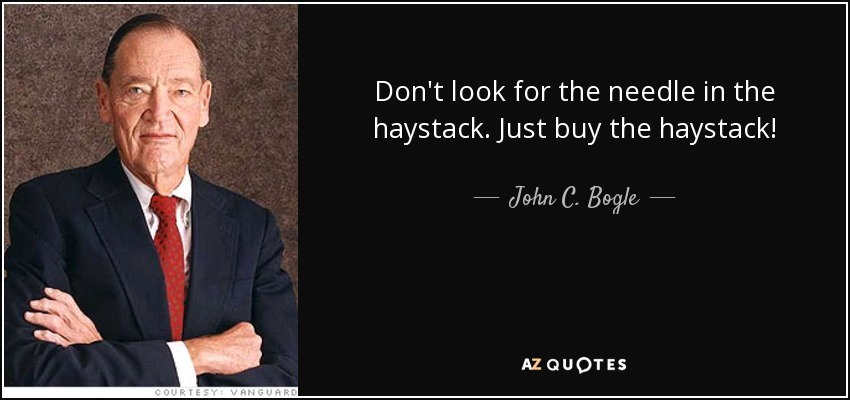
Why is Vanguard better than the rest? Because they have aligned incentives and very low fees.
Aligned Incentives
As the great Charlie Munger put it:
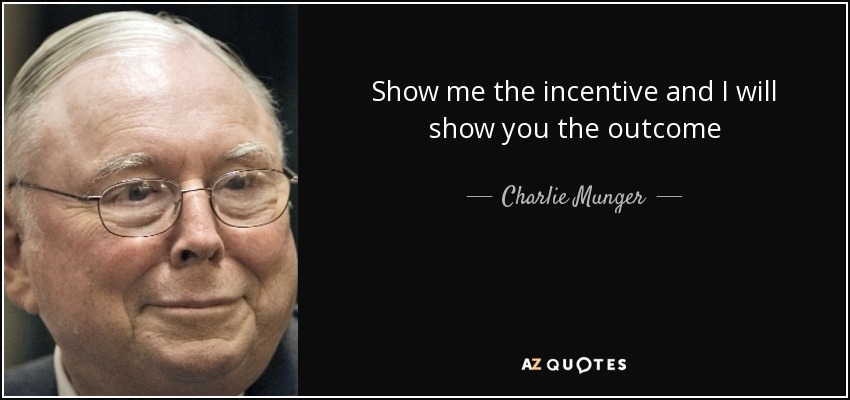
Most investment companies are like restaurants that charge you for walking in the door, sitting down, looking at the menu, ordering food, AND taking a cut of your dessert. Then they try to convince you to order more expensive dishes because they get a bigger tip. Vanguard? They’re more like a member-owned food co-op. You own the place, so guess who gets the profits? You do.
So how does Vanguard align its incentives?
- Mutual ownership & no conflict of interest. Vanguard is owned by its own funds, which in turn are owned by its investors. This means that Vanguard is effectively owned by you, as an investor.
- At-cost operation. Because of this structure, Vanguard operates at cost. It doesn’t need to generate profits for external shareholders, allowing it to keep fees very, very low. In fact, it keeps lowering fees over time by passing these savings back to investors in the form of lower expense ratios.
- Focus on long-term investing. This structure allows Vanguard to focus on long-term investor success rather than short-term profits or market trends. It does this partially by adding some delays to buying or selling (1-3 days, nothing significant), but it helps eliminate the urge for day trading.
- Low fees. The at-cost structure aligns well with Vanguard’s emphasis on low-cost index investing, which aims to match market returns rather than beat them. We’ll go more into this in the next section
Very Low Fees
John Bogle’s book, The Little Book of Common Sense Investing shows from study after study how fees are the real killer of long-term performance, and Vanguard has the lowest fees in the business (such as .04% on some funds).
Morning Star is one of the top organizations for investing information and more specifically known for information about mutual funds. They showed that fund fees are the best predictor of long-term financial success: How Fund Fees Are The Best Predictor of Success.
When looking at Hedge Funds, you’ll see that returns are abysmal, usually *because* the performance fees. The National Bureau of Economic Research (or NBER), the same people who officially declare whether we are in a recession or not, released this study: The Bottom Line on Hedge Fund Performance Fees.
If you don’t want to read the book, John Bogle also released an article The Arithmetic of “All-In” Investment Expenses which references many more studies backing up this claim.
All of this goes to the same conclusion:
Fees kill investing performance.
To put this in perspective, let’s look at a few scenarios. Let’s say that in every case you are starting to invest $100,000 and get a 10% return on money for 30 years, but let’s vary the fee amount.
| Starting capital | Fee | Ending Capital (after 30 years) |
|---|---|---|
| $100,000 | 2% | $931,727 |
| $100,000 | 1% | $1,217,218 |
| $100,000 | 0.5% | $1,389,983 |
| $100,000 | 0.04% | $1,569,666 |
Think of investment fees like a hole in your boat. A 2% fee might look tiny – it’s just a small hole, right? But over 30 years, that ‘small hole’ lets $638,000 slip through compared to Vanguard’s 0.04% fee. That’s enough to buy a house in many parts of the country! And the craziest part? You’re paying these fees whether your investments go up or down.
Which funds to choose?
Okay, we’ve talked a lot about who Vanguard is and why they’re often a good choice, now let’s look at some common funds that a lot of people use.
There are two main types of funds, mutual funds and ETFs. An ETF trades like a stock which means when you go to buy or sell the price you see might not reflect what you’ll actually get, also known as “slippage“. Many people suggest against ETFs as a general rule both because of the aforementioned slippage and because it is easier to do frequent trades than with a mutual fund. I personally think either is fine.
Each fund has a symbol that you can use to search or purchase information about a specific stock (such as when you are purchasing a stock through your brokerage account.)
| Fund | Symbol | Type | Fee |
|---|---|---|---|
| Vanguard 500 Index Fund Admiral Shares | VFIAX | Mutual Fund | 0.04% |
| Vanguard Total Stock Market Index Fund Admiral Shares | VTSAX | Mutual Fund | 0.04% |
| Vanguard Total World Stock Index Fund Admiral Shares | VTWAX | Mutual Fund | 0.10% |
| Vanguard S&P 500 ETF | VOO | ETF | 0.03% |
| Vanguard Total Stock Market ETF | VTI | ETF | 0.03% |
| Vanguard Total World Stock ETF | VT | ETF | 0.07% |
Let’s make this super simple. Ask yourself these three questions:
- Want to keep it dead simple? Go with VFIAX/VOO (S&P 500)
- Want to capture the entire US market? VTSAX/VTI is your friend
- Believe the whole world should be in your portfolio? VTWAX/VT is calling your name
I personally roll with VFIAX because it’s had slightly higher performance than VTSAX, but I think VTSAX is just about as good.
There are many more funds out there to choose from. A notable exception to this list are funds that are both stocks and bonds (which are often suggested as part of your portfolio). You can also choose funds that change their allocation through time, these are often retirement funds that have specific years. For instance, if you expect to retire in 2055, you could look at the Vanguard 2055 Target Retirement Fund which will slowly adjust to have more and more bonds the closer you get to retirement (more bonds is usually equated to more stability).
In conclusion
Whether or not you choose to invest with Vanguard doesn’t matter, but I hope I’ve convinced you to at least look at them and understand your options. Importantly, having a company that has low fees first and foremost is important, if you can also get one that has aligned incentives, even better.
Until next time!